
cosmeticsurgery@umassmemorial.org Contact us today to schedule a no-obligation consultation.

Cosmetic Procedures

Botox treatments

Botulinum toxin is made from a type of bacteria. It is toxic to the nerves. Another name for it is bacterial neurotoxin. An injection puts this toxin into muscle. There, it blocks the chemical signal from the nerves to muscles. This will decrease the muscle contraction (tightening).

There are several types and brands of this toxin. Examples include Botox, Dysport® and Reloxin®, which are formulations of botulinum toxin type A. Myobloc is another brand, but it is a formulation of botulinum toxin type B. These products are used for cosmetic and medical reasons.

This injection process is often called Botox injection, although any brand of the botul inum toxin may be used.

Botox for $199 (half-price) at Umass memorial Cosmetic Surgery Center for a limited time » 

Reasons for Botox procedureback to top

Botox is most commonly used as a treatment to smooth wrinkles on the face and neck. Botox is FDA approved for the treatment of frown lines between the brows.

Possible complications. Complications from Botox treatment are rare. When they occur, they are temporary and mild. Side effects are related to the site of injection. For example, if Botox injections are given near the eyes, there may be complications with eyelids or the brow line.

Temporary issues from Botox may include:

  • Redness
  • Bruising
  • Stinging around the injection sites

The following are less common reactions to the Botox treatment. They are generally mild and do not last long.

  • Nausea
  • Fatigue
  • Flu-like symptoms
  • Headache
  • Excessive weakness of the muscle around the eyes, which can cause drooping of the eyelids or obstruction of vision
  • Difficulty swallowing, which can occur in patients receiving Botox injections in their neck

The Botox procedure may worsen nerve or muscle disorders, such as:

  • ALS (amyotrophic lateral sclerosis)
  • Myasthenia gravis

The toxin can also interact with medicines, such as antibiotics. Tell your doctor about all of the medicines that you are taking before having a Botox treatment.

You should not have Botox if you:

  • Have an infection or inflammation in the area where Botox will be injected
  • Are sensitive to the ingredients in Botox
  • Are pregnant or breastfeeding

FDA Public Health Advisory for Botulinum Toxin
There is a risk that the botulinum toxin could spread beyond the Botox injection area. This can cause botulism symptoms, including difficulty breathing and death. These symptoms appear to be more common in children with cerebral palsy who receive the Botox injection to treat spasticity. The warning is for Botox, Botox Cosmetic, Myobloc and Dysport. For more information, please visit: http://www.fda.gov/NewsEvents/Newsroom/PressAnnouncements/ucm175013.htm.

    What to expectback to top

    Anesthesia. Most often, none is given for a Botox procedure. Some patients may prefer to have the area numbed for comfort. In this case, a topical anesthetic may be used.

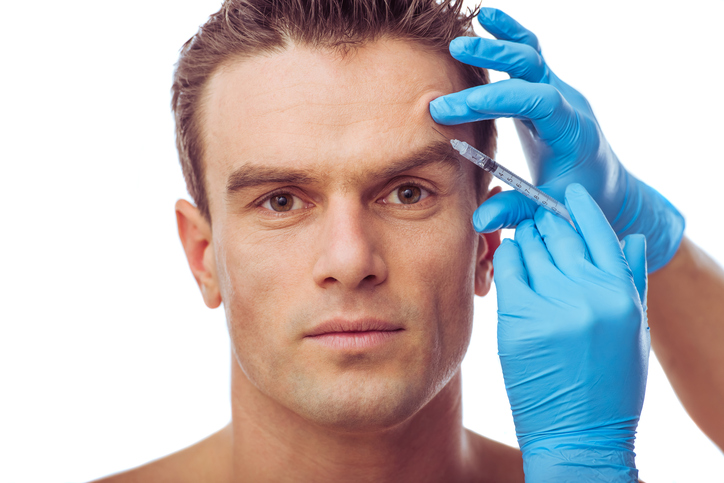
    Description of the Botox procedure. A thin needle will be used. The doctor will inject the toxin through the skin into the targeted muscle. You will often need several injections in a small area.

    After procedure. There is very little recovery needed after Botox treatment, but remember to:

    • Remain upright for several hours
    • Avoid alcohol

    How long will it take? The length of the Botox procedure will depend on the number of sites involved. It is often less than 20 minutes.

    Will it hurt? You may have some minimal discomfort.

    Postprocedure care. Normal activities may be resumed after the Botox procedure. For the best recovery, follow your doctor’s instructions. The toxin temporarily weakens targeted muscles. The treatment lasts up to four months. With repeated use, the effects may last longer.

    Call your doctorback to top

    After arriving home after your Botox treatment, contact your doctor if any of the following occur:

    • Difficulty breathing
    • Difficulty swallowing
    • Difficulty speaking
    • Severe lower eyelid droop or obstructed vision
    • Excessive weakness around the Botox injection site
    • Rash or any other sign of an allergic reaction

    In case of an emergency, call 911.

    Botox Resourcesback to top

    Plastic Surgery Resourcesback to top

    American Society for Dermatologic Surgery
    http://www.asds.net/

    American Society of Plastic Surgeons
    http://www.plasticsurgery.org/

    Referencesback to top

    Allergan Physician Production Information. Botox cosmetic (botulinum toxin type A). Published April 2008.

    Baran R, Maibach H. Textbook of Cosmetic Dermatology. 3rd ed. New York, NY: Taylor and Francis; 2004.

    C onn HF, Rakel R. Conn’s Current Therapy. 54th ed. Philadelphia, PA: WB Saunders Company; 2002.

    Habif T. Clinical Dermatology. 4th ed. St. Louis, MO: Mosby; 2004.

    Ondo WG, Gollomp S, Galvez-Jimenez N . A pilot study of botulinum toxin A for headache in cervical dystonia. Headache. 2005;45(8):1073-1077.

    Ward A, Roberts G, Warner J, et al. Cost-effectiveness of botulinum toxin type A in the treatment of post-stroke spasticity. J Rehabil Med. 2005;37(4):252-257.

    11/4/2009 DynaMed Systematic Literature Surveillance http://www.dynamicmedical.com/what.php: FDA gives update on botulinum toxin safety warnings. US Food and Drug Administration website. Available at: http://www.fda.gov/NewsEvents/Newsroom/PressAnnouncements/ucm175013.htm. Updated August 3, 2009. Accessed November 4, 2009.


    Last reviewed: November 2009 by Mervin Low, MD, PC
    Last updated: 12/09/2009

    This content is reviewed regularly and is updated when new and relevant evidence is made available. This information is neither intended nor implied to be a substitute for professional medical advice. Always seek the advice of your physician or other qualified health provider prior to starting any new treatment or with questions regarding a medical condition.

    To send comments or feedback to our Editorial Team regarding the content please email us at healthlibrarysupport@ebscohost.com.

    Privacy Policy | Editorial Policy

    VISIT the American Society of Plastic Surgeons (ASPS) site for more information on Botox treatments».

    view all
    Our surgeons

    Our Surgeons UMass Memorial cosmetic surgeons evaluate patients with a holistic approach. Their focus is on making improvements in our patients’ natural beauty through state-of-the-art procedures that aim to help patients look and feel their best. more»

    Insights/resources

    Botox puts your face in the spotlight »

    Put your best face forward with Botox and other injectable cosmetic fillers »

    Three ways wrinkle fillers help you look younger without surgery »

    American Society of Plastic Surgeons (ASPS) site for more information on Botox treatments.

    University of Massachusetts Medical School